About this directory
The Franklin Seniors Directory is a free list of services, housing, places of faith and community groups for older people across Franklin.
What it is
It is a directory of local help for older people, their whānau and the people who care for them. Each listing tells you what an organisation does, where it is, what it costs and how to get in touch. You can use it on this website, print your own copy, or pick up a printed booklet.
Who it covers
It covers the whole of the Franklin Local Board area in south Auckland. That means Pukekohe and the towns around it, Waiuku and the Āwhitu Peninsula, and Beachlands, Maraetai, Clevedon, Whitford and Kawakawa Bay. It also covers the rural and coastal communities and settlements nearby and in between. Organisations that serve all of Franklin are listed too.
Who made it
Listings were gathered and checked by the Franklin Seniors Forum. Supported and funded by Franklin Local Board, Auckland Council. The aim is for a Franklin community group to own and run the directory in the long term.
How to update a listing
Every listing has a Report a change button. Use it to tell us about a wrong phone number, a new address or a group that has closed. To add an organisation that is not here yet, use the Suggest a listing page. A person checks every report before anything changes on the website.
How listings are checked
The Franklin Seniors Forum checks every listing. Nothing changes without a person looking at it.
Listings were gathered and checked by the Franklin Seniors Forum. When a listing has been checked, you will see a tick and the date. The Franklin Seniors Forum checks listings and welcomes corrections and updates: if something looks wrong, press the Report a change button on the listing. A person reads every report before anything changes. Nothing changes on this website without being checked first.
286 of 354 listings have been checked by the Franklin Seniors Forum. The most recent check was on .
Add a listing or report a change
Both take a few minutes. A person reads every report and suggestion before anything changes on the website.
Something is wrong on a listing
Every listing has a Report a change button near the bottom of the page. Press it and tell us what is wrong: a wrong phone number, a new address, or a group that has closed.
An organisation is missing
If a service, group or place should be here and is not, tell us its name and a phone number or website. The Franklin Seniors Forum will check it and add it.
You do not need an account for either. Nothing is published straight away.
Hear from Franklin residents
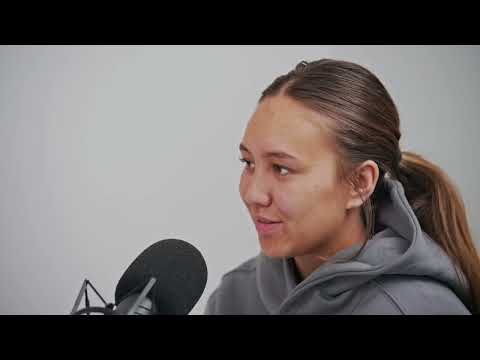
In this short video, older residents of Franklin talk about what makes a community age-friendly and easy to get around. Made with support and funding from Franklin Local Board, Auckland Council.
Transcript
Every word spoken in the video Franklin Age-Friendly and Accessible Communities - Community Voices. Made with support and funding from Franklin Local Board, Auckland Council. The names are the ones shown on screen.
Show the transcriptHide the transcript
Interviewer: Can you tell us your name, where you live in Franklin and how long you've lived here for?
Adrienne Meier: I'm Adrienne Meier, the Possum Bourne Retirement Village. We've been there for 18 months.
Arshdeep Kaur: My name is Arshdeep Kaur and I've been here for the last eight years.
William Peace: I'm about to move to Franklin, hopefully the next year or two.
Christina Rogstad: Christina Rogstad. I've been here in Pukekohe about seven years.
Whaea Denise Proctor: So my whānau immigrated to Pukekohe. I was born here.
Erwin Meier: Erwin Meier, Possum Bourne Retirement Village. Farming in the Franklin area for the last 25 years.
Harsad Bhula: Harsad Bhula, and I was born in Franklin. I live on Pukekohe Hill.
Jim Peters: Jim Peters. Been living in Clevedon on and off since 1976.
Kym Cormack: Kym Cormack. I've been in Pukekohe for the last 18 years.
Parekawhia Albert: Parekawhia Albert. I was born here. Had my four children here.
Matua Robert Clark: Robert Clark. So I've been here all my life.
Robyn Pearce: Robyn Pearce. I live in Clarks Beach. I've been there now for 21 years.
Ross Cormack: I live out in Pōkeno. Three and a bit years.
Interviewer: What does living well mean to you at this stage of your life?
Adrienne Meier: Being active, being as healthy as I can be.
Arshdeep Kaur: Being independent.
William Peace: And having a community that I can just go to anytime.
Christina Rogstad: I think respect and freedom of choice.
Whaea Denise Proctor: Your mokopuna, because that's your whakapapa. That's the next generation.
Erwin Meier: Being healthy, active, happy and engaged.
Harsad Bhula: Waking up in the morning, see the day through. Working without stressing.
Whaea Denise Proctor: First and foremost for me, living well means that I'm spiritually intact. Very closely followed to that is family.
Parekawhia Albert: Eating well, looking after my family.
Matua Robert Clark: I can physically, mentally and spiritually interact with my children, my grandchildren, with my community.
Robyn Pearce: It means having health, friends.
Ross Cormack: Staying active. Movement is life.
Interviewer: What services or places do you rely on most to live well?
Arshdeep Kaur: The car, to get in to places.
William Peace: For me, it's been a sports club, the homes of my friends, good basic services like Woolworths, Countdown, all those things that are accessible, a money machine, a nice bakery. Oh, yes, and a very good dairy.
Christina Rogstad: You need to have a safe and healthy environment where you live.
Matua Robert Clark: Good medical services. The place is getting better, but needs a lot more.
Interviewer: How easy or difficult is it to access those services using the transport you normally use?
Adrienne Meier: If you haven't got your mobility, it's really difficult to get around. You'd have to either get a taxi or have friends helping.
Parekawhia Albert: Not being informed of what is out there for retirement. Receiving it in a mailbox or receiving it by email doesn't help.
Interviewer: What makes it harder for older people to get around or access what they need in this area?
Matua Robert Clark: More private services rather than public services. So we need more, better public services.
Interviewer: What helps you get where you need to go or stay connected?
Whaea Denise Proctor: The marae.
Interviewer: What would be the best way for people your age to access a local directory of services?
Whaea Denise Proctor: Publications.
Harsad Bhula: One-on-one, the libraries.
Erwin Meier: Online.
Adrienne Meier: Their phones, and other people.
Matua Robert Clark: The word of mouth.
Parekawhia Albert: Our marae.
Ross Cormack: Maybe I'd go to Citizens Advice, which is a good excuse to get out the door.
Interviewer: From your perspective, what are the biggest barriers to ageing well in Franklin right now?
Adrienne Meier: Your own self, probably.
William Peace: Yeah, we're not heard.
Matua Robert Clark: Everything has started to become quite impacted and not accessible.
Harsad Bhula: Parking is limited. Train station, you know, a lot of them use the gold card after 9 o'clock. There's no parking for them.
Ross Cormack: Probably education. So, in terms of what does being well mean? What are the processes?
Whaea Denise Proctor: Communication is always a big one.
Interviewer: Do you think loneliness or isolation is an issue for older people here?
Adrienne Meier: Oh, absolutely.
Parekawhia Albert: It's inevitable.
Christina Rogstad: It's a growing trend. It's very detrimental to our physical health and to our mental health.
Harsad Bhula: Yeah, definitely. Very much so.
Erwin Meier: In fact, I'm working on some actions to go and address that in my retirement village.
Robyn Pearce: For some people, the shy ones, the perhaps reserved people, are people that have maybe recently come to the community or their loved ones have just passed away.
Interviewer: What do you think Franklin already does well for old people?
William Peace: Housie. Bingo. These are not targeted for elderly, but you see elderly participating in them.
Matua Robert Clark: Things like St John's, Salvation Army, all of the volunteer space, they do great work.
Ross Cormack: Seems like there's some good support systems out there in terms of social services.
Interviewer: Are there any services, groups or initiatives that really support older people and should be better known?
Jim Peters: There's a very strong bridge club.
Whaea Denise Proctor: A group called Probus. They invite speakers to present on all kinds of things that are actually interesting for people in the older community.
Interviewer: In what ways do older people contribute to the community here?
Ross Cormack: I think older people have a lot of knowledge and a lot of wisdom to share, but maybe are a bit frightened to do that in this day and age.
Interviewer: What sometimes gets in the way of older people staying involved or feeling valued?
Whaea Denise Proctor: Lack of respect.
Robyn Pearce: Health is a big issue. If they haven't got health, they haven't got the energy to go out and do things.
William Peace: Because of their age, their frailty, maybe their disability.
Erwin Meier: The way other people treat them. If you teach people that they're old, they will act old.
Jim Peters: Well, ageism, I suppose.
Christina Rogstad: Feeling invisible.
Ross Cormack: Maybe family moves away, they become isolated. They stop engaging in their activities.
Matua Robert Clark: Their voice not being heard.
Interviewer: What is one practical thing that could be done locally to improve life for older people in Franklin?
Adrienne Meier: Have a buddy system.
Arshdeep Kaur: More access to community centres and community activities.
William Peace: Zumba. Zumba. I love Zumba.
Parekawhia Albert: Letting them have the ideas, giving them that, oh, what do we say? Mojo back.
Interviewer: When you think about the future, what would you like Franklin to be known for and how it supports our old people?
A diverse, inclusive community.
Whaea Denise Proctor: We need our voices to be heard.
Harsad Bhula: I can see it prospering.
Whaea Denise Proctor: It is one of the best places to come to.
Parekawhia Albert: Allow people to be people, elders to be elders.
Matua Robert Clark: Quality of care for all people.
Robyn Pearce: It's a friendly place to be.
Adrienne Meier: Oh, it's a lovely town. We've been here for many years. So, yeah, I really love it.
William Peace: We need to recognise the richness of their history that they hold.
Jim Peters: The top of the list usually is sort of relationships, social relationships.
Whaea Denise Proctor: So I think that whole visibility thing is really important to people as they get older.
Parekawhia Albert: Because when an elder walks with a grandchild, the grandchild teaches the elder a lot. The grandchild teaches grandparent how to be open again and how to speak their minds and not be afraid.
Matua Robert Clark: You need to just have the many voices together, you know, support them. And I acknowledge the local board and the endeavours to do this way. But there's a time where you've got to sit in the front, the many as well. So you get the single voice, but you got to get the united voice as well.
Ross Cormack: All any of us want to be is heard, you know. And if we can't speak and communicate, we're kind of dehumanising people. That's what separates us from the beast, right? We can talk, we can communicate, we can feel each other's energy. You know, and so if we could get that happening a bit more, that would be pretty cool.
Questions people ask
Short answers to the questions we hear most.
- Who is this directory for?
- It is for older people in Franklin, their whānau, friends and carers. Anyone can use it. You do not need an account and it costs nothing.
- Which places does it cover?
- It covers the whole Franklin Local Board area in south Auckland, including Pukekohe, Waiuku, Beachlands, Maraetai, Clevedon and the many rural, coastal and smaller communities and settlements nearby and in between.
- How do I get a listing changed?
- Press the Report a change button on the listing and tell us what is wrong. A person checks every report before anything changes. Nothing changes on the website without being checked first.
- Can I get a printed copy?
- Yes. You can download and print a PDF by area from this website. Printed booklets will also be produced and distributed periodically through community venues.
- Is the information up to date?
- Listings are checked by the Franklin Seniors Forum, and each one shows the date it was last checked. Organisations do change, so if you find a wrong number, please tell us with the Report a change button.
Supported and funded by
Franklin Local Board, Auckland Council. The Franklin Seniors Forum gathers and checks the listings. The aim is for a Franklin community group to own and run the directory in the long term.